
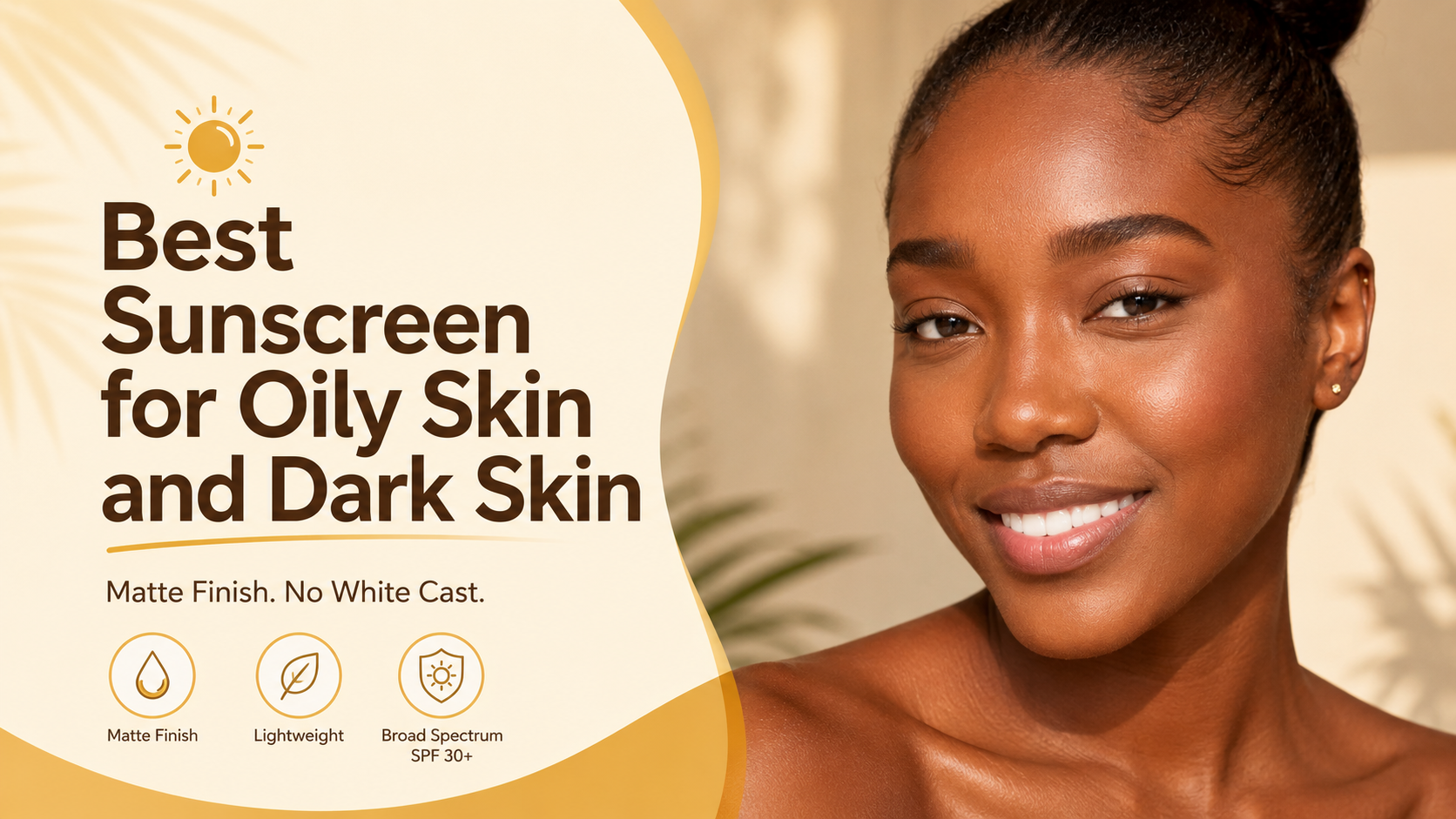
Why Oily Skin and Dark Skin Need a Specific Kind of Sunscreen
If you have oily skin and a deeper complexion, you already know the struggle. Most sunscreens either leave a greasy film that makes your face look like a glazed donut by noon, or they dry down to an ashy gray cast that no amount of blending will fix. Neither option feels good, and both make it tempting to skip sunscreen altogether. That temptation is exactly how so many of us end up with uneven tone, stubborn dark spots, and premature aging that could have been prevented.
Here is the truth that the beauty industry took far too long to acknowledge. For decades, sunscreen was formulated and marketed for lighter skin. The formulas were tested on lighter complexions, the models in the ads had lighter skin, and the white cast that those products left behind was never treated as a real problem, because on lighter skin it simply was not as visible. On melanin rich skin, that same cast turns your face a dull, chalky gray. It shows up in every selfie, every group photo, and every mirror in bright light.
Oily skin adds a second layer to the challenge. Your skin naturally produces more sebum, which is the oil that keeps skin protected and hydrated. That is not a flaw. Oily skin actually tends to age more slowly and stay plump longer. But when you layer a heavy, greasy sunscreen on top of skin that is already producing plenty of oil, you get shine, clogged pores, and that slippery feeling that makes makeup slide right off.
So you are fighting two battles at once. Oily skin needs oil control and a formula that will not clog your pores. Dark skin needs pigment friendly protection that disappears into the skin instead of sitting on top of it. The good news is that you do not have to choose between the two. The right sunscreen solves both problems in a single step, and once you find it, daily sunscreen stops being a chore and becomes something you actually look forward to.
The Real Cost of Skipping Sunscreen on Deeper Skin Tones
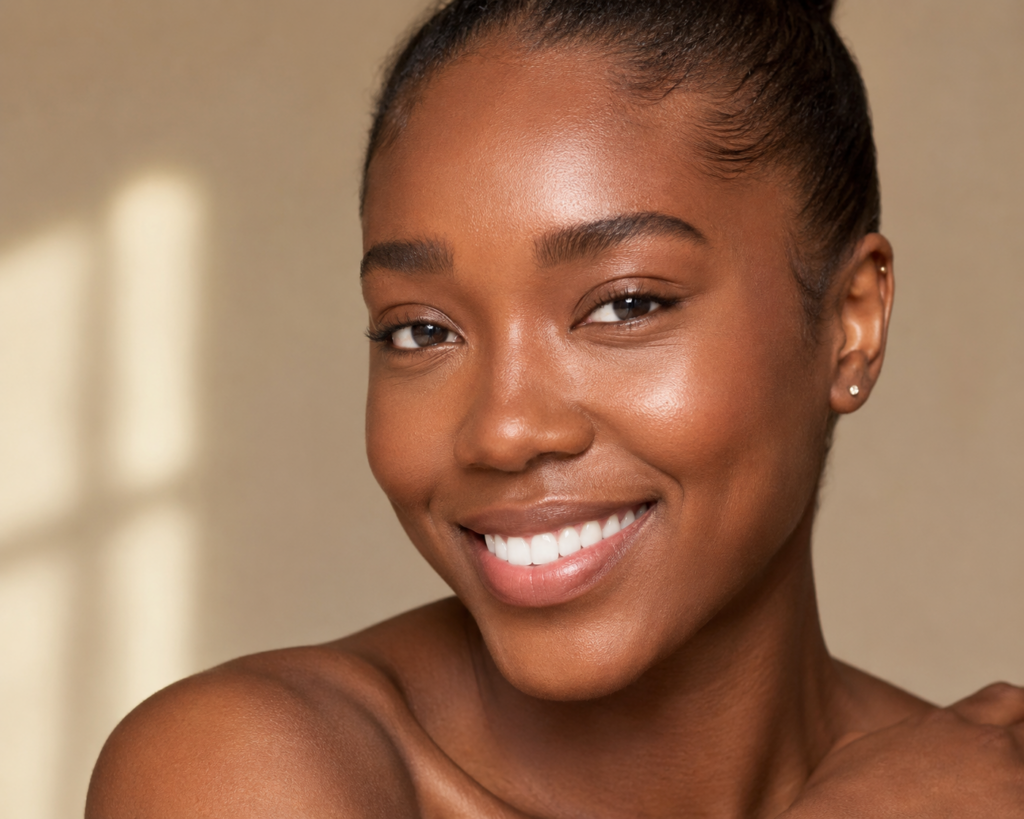
There is a myth that will not die, and it goes something like this. Melanin is natural sun protection, so people with dark skin do not really need sunscreen. It is true that melanin offers some built in defense. Deeper skin tones carry a natural SPF of roughly 13, which is real but nowhere near enough to protect you from the full range of damage the sun causes. That number also falls well short of the SPF 30 minimum that dermatologists recommend for everyone.
The bigger issue is that the damage on darker skin often shows up differently. Instead of the obvious sunburn you might see on lighter skin, sun exposure on melanin rich skin tends to show up as hyperpigmentation. That means dark spots, uneven patches, and a tone that looks blotchy rather than smooth. Every time you spend time in the sun without protection, you are giving those spots a reason to deepen and multiply. If you already deal with post inflammatory hyperpigmentation from acne, ingrown hairs, or old scars, the sun makes all of it worse and slower to fade.
Skin cancer is the part almost nobody talks about, and the silence is dangerous. When skin cancer does appear on darker skin, it is frequently caught at a later, more serious stage, in part because so many people assume they are not at risk. Daily sunscreen is one of the simplest habits you can build to protect not just how your skin looks, but your long term health. Oily skin is no exception to any of this. In fact, because oily skin is often more prone to breakouts and the dark marks they leave behind, sun protection matters even more.
What to Look For in a Sunscreen for Oily and Dark Skin
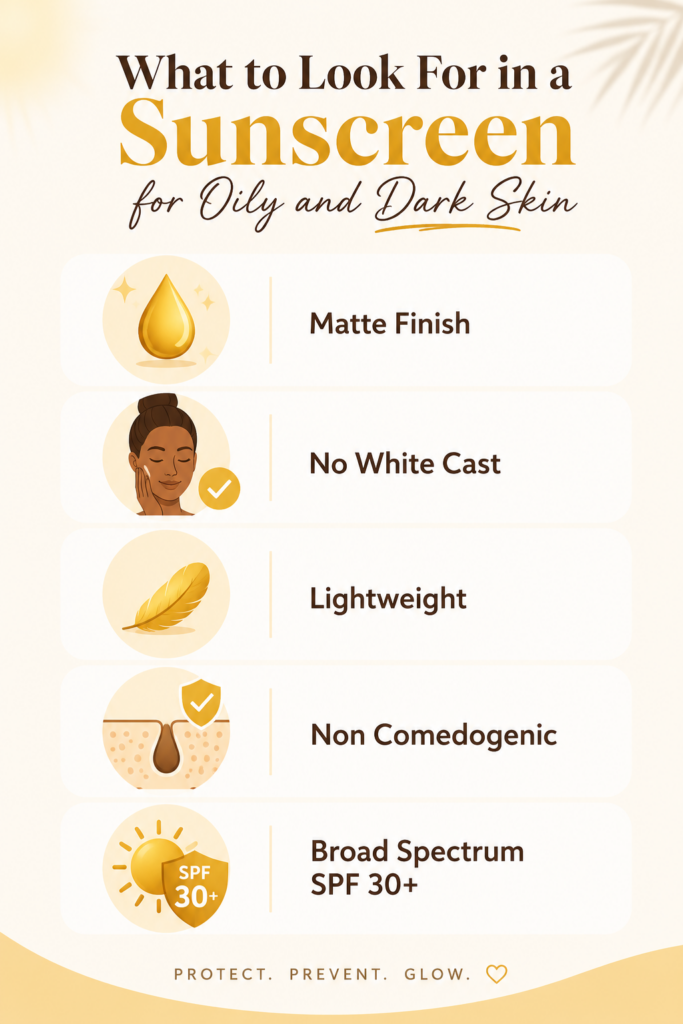
When you are shopping, keep these features at the top of your list. Skip anything that does not check these boxes, because your skin type does not have room for compromise.
- Matte or non greasy finish. A matte formula soaks up excess oil so you stay shine free longer. This is the single most important feature for oily skin, and it is what separates a sunscreen you will actually wear from one that lives forgotten in a drawer.
- No white cast. Chemical sunscreens and well formulated tinted options blend seamlessly into deeper skin. Avoid heavy zinc oxide formulas unless they are specifically tinted for melanin rich skin, because untinted mineral formulas are the biggest cause of that gray, ashy look.
- Lightweight texture. A thin, fast absorbing lotion feels like nothing on the skin and layers well under makeup. Thick, heavy creams sit on top of oily skin and make shine and pilling far more likely.
- Non comedogenic. This means the formula is designed not to clog your pores, which keeps breakouts at bay. Clogged pores are a fast track to more acne and more of the dark marks that acne leaves behind.
- Broad spectrum SPF 30 or higher. You need protection from both UVA rays, which age the skin and drive hyperpigmentation, and UVB rays, which burn it. Broad spectrum is the label that tells you a sunscreen covers both.
Chemical vs Mineral Sunscreen for Oily Melanin Rich Skin
You will see two main types of sunscreen on the shelf, and the difference matters a lot for your skin type. Mineral sunscreens, sometimes called physical sunscreens, use ingredients like zinc oxide and titanium dioxide. They sit on top of the skin and reflect the sun away. The problem is that these ingredients are naturally white, so untinted mineral formulas are the usual culprit behind that dreaded gray cast on deeper skin.
Chemical sunscreens work differently. They absorb into the skin and convert the sun rays into heat that is released from the body. Because they sink in rather than sitting on top, they tend to blend clear on all skin tones, which makes them a favorite for melanin rich complexions. Many chemical formulas are also lighter in texture, which suits oily skin well.
This does not mean mineral sunscreen is off limits for you. Tinted mineral formulas, which add warm pigments to cancel out the white, can look beautiful on dark skin and are a great option if your skin is sensitive to chemical filters. The takeaway is simple. Whichever type you choose, prioritize a formula that was designed with deeper skin tones in mind, and always test it in natural light before committing.
Our Top Pick: Black Girl Sunscreen Make It Matte SPF 45
Make It Matte SPF 45 was built for exactly this skin type. It delivers broad spectrum protection with a true matte finish, so your face stays balanced instead of slick. Because it was formulated with melanin rich skin in mind, it blends in completely with no white cast. That means no gray flashback in photos and no chalky film in the mirror, just your skin looking like your skin.
It is lightweight enough to wear alone on a bare face day and controls oil well enough to double as a makeup gripping base. If your skin tends to get shiny by lunch, this is the formula that keeps you looking fresh into the evening. The matte finish is not drying either, which is a common fear with oil controlling products. It manages surface shine without stripping the moisture your skin needs to stay healthy and comfortable.
What makes it special is that it was created by and for people who were tired of sunscreen that ignored their needs. Every part of the formula, from the finish to the way it disappears on deeper tones, was designed to solve the exact frustrations that push so many of us to skip sunscreen in the first place. It is not a general product with melanin rich skin added as an afterthought. It is the whole point.
How to Apply It for Best Results
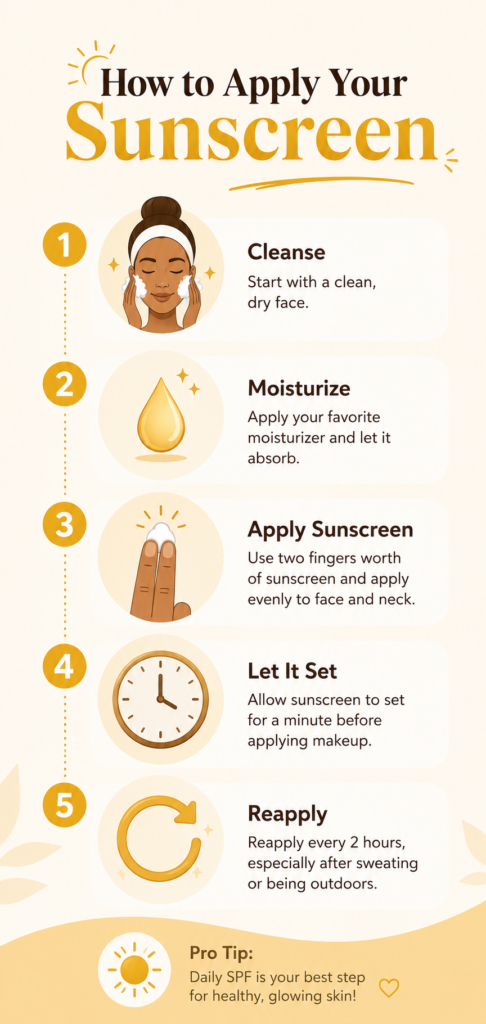
Getting the most out of your sunscreen is about technique as much as product. Even the best formula will let you down if you apply too little or rush the process. Follow these steps and you will get the full protection on the label while keeping your skin matte and comfortable.
- Start with clean, dry skin. Wash your face with a gentle cleanser and pat it dry so your sunscreen has a fresh surface to grip.
- Apply your serums and moisturizer first, then let them fully absorb. Give each layer a minute so nothing pills or slides when you add sunscreen on top.
- Use two finger lengths of sunscreen for your face and neck. Most people underapply, which quietly cuts your protection in half. Two full fingers is the amount that gets you the SPF on the label.
- Let it set for a minute or two before makeup. This short pause is what prevents pilling and keeps your base smooth.
- Reapply every two hours when you are out in direct sun. Keep a travel size in your bag so a midday refresh is easy.
Building a Simple Routine Around Your Sunscreen
Sunscreen works best as the final step of a short, consistent morning routine. You do not need a ten step regimen to see results. In the morning, cleanse with something gentle, follow with a lightweight moisturizer suited to oily skin, and finish with your Make It Matte SPF 45. That is a complete, protective routine in three steps, and it takes less than five minutes.
If you treat hyperpigmentation with actives like vitamin C, niacinamide, or an exfoliating acid, sunscreen becomes even more important, not less. Those ingredients can make your skin more sensitive to the sun, and using them without daily protection can actually deepen the very spots you are trying to fade. Think of sunscreen as the step that protects all the work your other products are doing. Skipping it is like watering a plant and then leaving it in the dark.
Consistency beats intensity every time. A simple routine you follow every single day will do far more for your skin than an elaborate one you abandon after a week. The goal is to make sunscreen so easy and so pleasant to wear that reaching for it becomes automatic, the same way you reach for your toothbrush without thinking about it.
Frequently Asked Questions
Does oily skin still need sunscreen every day?
Yes. Oily skin is just as vulnerable to sun damage, dark spots, and premature aging as any other skin type. Skipping sunscreen also makes hyperpigmentation worse over time, and oily skin is often more prone to the breakouts and dark marks that hyperpigmentation feeds on. Daily protection is non negotiable no matter how much oil your skin produces.
Will a matte sunscreen dry out my skin?
No. A well formulated matte sunscreen controls surface oil without stripping the moisture your skin needs. Make It Matte manages shine while keeping your skin comfortable. You should still apply a lightweight moisturizer underneath so your skin stays balanced and hydrated.
Can I wear matte sunscreen under foundation?
Absolutely. Its shine controlling finish actually helps your makeup grip and last longer through the day. Let the sunscreen set for a minute or two before applying foundation, and press your makeup on rather than rubbing, so nothing pills.
How much sunscreen should I actually use on my face?
Aim for about two finger lengths of product for your face and neck combined. This is the amount that delivers the SPF printed on the bottle. Using less means you are getting less protection than the label promises, which is one of the most common mistakes people make.
Is SPF 45 enough for dark skin?
Yes. Dermatologists recommend a minimum of SPF 30 for everyone, and SPF 45 comfortably exceeds that. What matters just as much as the number is applying enough product and reapplying every two hours during direct sun exposure.
Ready to stay protected and shine free? Explore Black Girl Sunscreen Make It Matte SPF 45 and find the finish your skin has been missing. Your future self, with brighter and more even skin, will thank you for starting today.